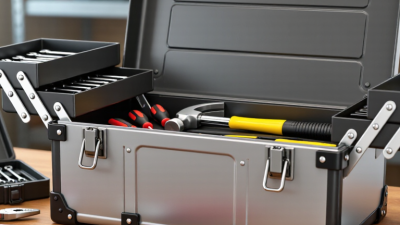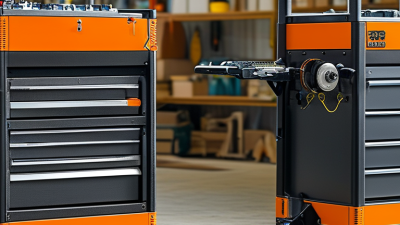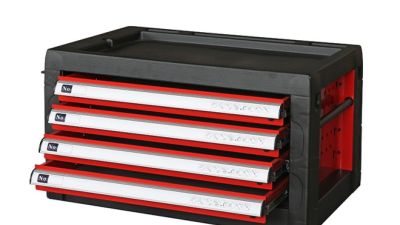
Picking out the best portable tool chest really depends on your workday. Think about how you use your tools—do you hop from one room to another, load things up in your vehicle, or just keep everything beside one workbench? If you’re always on the move, a smaller, compact chest that fits under a worktable might do the trick. But if you need to carry heavier tools around the garage, a bigger rolling model can save your back. Make sure to check out the actual drawer sizes, how much weight it can handle when loaded, how comfortable the handle feels, and whether the wheels roll smoothly—don’t just go for the look of the finish.
A good rule of thumb is: "pick the one that’s easy to move even when it’s full, not just when it’s empty." Honestly, this isn’t some crystal-clear industry quote or anything, just practical advice. Nobody’s quoting experts here—better to double-check real opinions before taking this as gospel.
Pay close attention to the little details you’ll interact with every day. The drawers should slide easily with your usual tools inside, and the latches need to stay shut during transport—no popping open halfway through! Also, watch out for sharp edges on the drawers that could catch your fingers—that’s a pain. If you’re taking the chest outdoors, think about weather exposure and make sure to give it a good clean after dusty or damp jobs. Remember, no single design is perfect for everyone. Even a tough, heavy-duty chest can feel awkward if overloaded. This guide walks you through stuff like portability, capacity, build quality, and organization so you can find a chest that really fits your tools and how you work—not just what looks good in your shop."
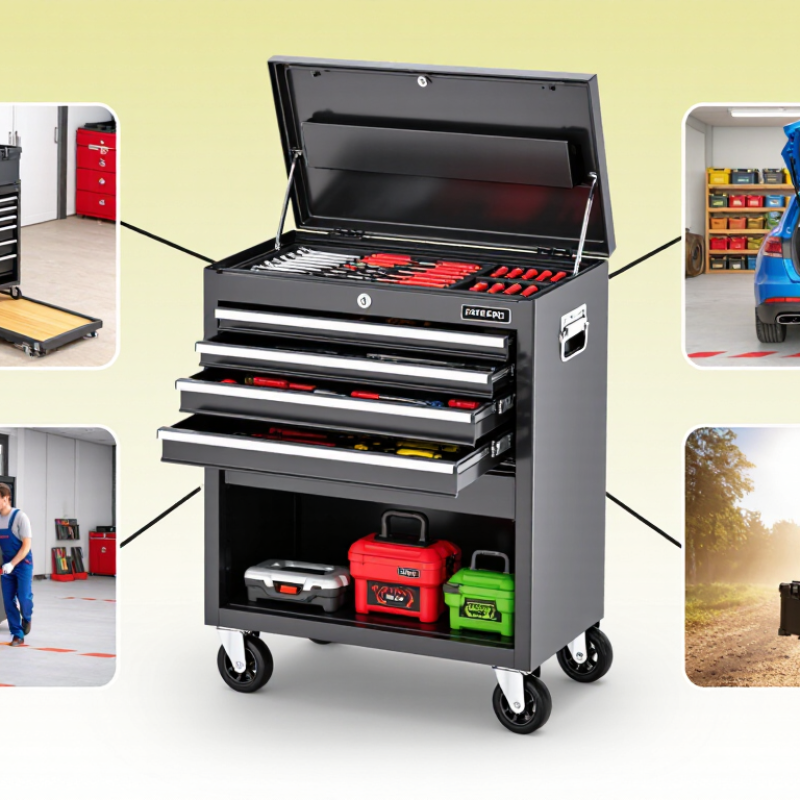
Start with an honest inventory of the tools you actually use, not the collection you hope to build. Separate daily essentials from occasional items, then note their sizes, shapes, and weight. Small sockets and loose fasteners need dividers; a drill or hammer needs a deeper compartment. Measure twice. Check that long handles fit without forcing the lid shut, and leave a little room for future additions.
Your work environment should guide the chest’s design. For frequent trips between a vehicle and job sites, sturdy handles, secure latches, and smooth-rolling wheels can make a loaded chest easier to manage. In a small workshop, compact dimensions and accessible drawers may matter more than maximum capacity. Keep it simple. A Portable Tool Kit can help organize the items you carry most often, but it should not make the main chest awkwardly heavy. Think about dust, damp floors, stairs, and where the chest will sit when open. It is easy to overvalue extra compartments; a layout that looks tidy in a shop may feel frustrating in a cramped work area. Before buying, test the drawer reach and estimate the weight when fully loaded. A few minutes of checking can prevent a poor fit.
Portable tool chests differ in how they balance access, capacity, and transport. Hand-carry cases suit small repair kits, but heavy tools can make a full case awkward on stairs. Rolling chests reduce lifting across smooth floors; rough ground and narrow doorways can defeat their wheels. Stackable modular cases save vehicle space and let crews carry only needed sections. The trade-off is slower access when the required module sits at the bottom.
Configuration matters as much as chest type. Shallow drawers keep sockets and fasteners visible, while deep compartments fit drills or larger hand tools. Dividers prevent small parts from sliding together, though fixed dividers may waste space around irregular tools. The U.S. Bureau of Labor Statistics recorded 2.6 million nonfatal workplace injury and illness cases in private industry in 2023, a reminder that handling weight and access deserves attention. That figure is not specific to tool storage, and a chest alone cannot prevent injuries. Check loaded weight, handle position, latch security, and wheel clearance before buying. A layout that looks tidy in a shop may still frustrate you in a cramped van.
A useful portable tool chest carries the tools you actually use, not every tool you own. Check its rated capacity, then subtract the chest’s empty weight when estimating what you will move. NIOSH’s Revised Lifting Equation Applications Manual (1994) sets 51 pounds as a load constant under ideal lifting conditions; awkward reaches, twisting, and repeated lifts reduce the recommended load. That is not a chest limit. It is a reminder to consider the loaded weight, stairs, and how far you must carry it.
Organization should make common tools easy to find. Try a layout with shallow top trays for drivers and pliers, plus deeper drawers for drills or larger parts. Check whether dividers stay put when the chest rolls. A drawer that slides open in transit can turn a tidy kit into a jumble.
Check the label. For protection, inspect the latch, corner seams, and wheel locks; these take the knocks when a chest crosses a rough floor.
Keep heavy tools low to reduce tipping, and test the handle with the chest loaded. I still tend to overpack. That deserves a second look: a larger capacity can encourage weight that makes the chest less portable.
Choosing a Portable Tool Box starts with the materials, not the number of drawers. Steel handles dents and heavy tools well, but it adds weight. Aluminum resists rust and is easier to carry, though thin panels may flex under pressure. Tough plastic can suit household repairs, especially where moisture is common. Check the corners and lid, not just the advertised material. Those areas often take the first knocks.
Build quality shows up in small details. Open and close every drawer; it should slide without catching or rattling. Lift the loaded box by its handle and watch for bending or loose joints. A lid that sits evenly helps keep out dust, but no portable chest is perfectly sealed. That matters in a damp garage. Security deserves the same close look. A sturdy latch can prevent accidental opening, while a lock point may deter casual access. It is not a substitute for secure storage. Also consider whether the lock is easy to use with gloves. I would not assume a heavier box is automatically stronger; weight can hide awkward design. Check the warranty and replacement-part availability, too. Small hinges fail.
Choosing the best Portable Tool Cart starts with movement, not storage capacity. I check its empty weight, wheel diameter, handle height, and turning radius. A loaded cart should roll smoothly across concrete, thresholds, and uneven workshop floors. The U.S. Bureau of Labor Statistics recorded 2.6 million nonfatal workplace injuries and illnesses in private industry during 2023. Poorly managed pushing and lifting can increase daily strain.
Test the handle with your elbows slightly bent. Your shoulders should stay relaxed. Small details matter. A narrow frame fits vehicle aisles, but it may feel unstable when heavily loaded. A wider base improves balance, although it consumes more floor space. I once selected a tall cart for extra storage and regretted it after repeated loading into a vehicle. The drawers were useful. The height was not.
Transport compatibility deserves a physical check. Measure the cart against your van door, workshop ramp, liftgate, and storage bay. Confirm that the casters lock securely during transit. The National Institute for Occupational Safety and Health emphasizes reducing forceful exertion and awkward postures through better task design. That principle applies here. A cart that requires twisting, lifting, or sudden braking is not truly portable. The BLS reported that musculoskeletal disorders accounted for 30% of days-away-from-work cases in 2022. Choose manageable dimensions, a balanced load, and wheels suited to your actual route, not an idealized showroom floor.
Choosing a Portable Tool Bench is less about the lowest price and more about dependable value. A cheap chest may save money today, but thin steel, weak casters, and poor drawer slides can become expensive quickly. Grand View Research estimates the global tool storage products market will grow steadily through 2030, reflecting stronger demand from professionals and serious home users. That growth makes comparison more important, not easier.
Check the warranty before comparing drawer counts. A longer warranty matters only when it covers slides, wheels, locks, and structural failure. Read the exclusions carefully. Some warranties require proof of purchase or exclude damage from overloading. I once selected a lower-priced chest with impressive capacity. The drawers sagged within a year. That decision still bothers me.
Calculate long-term cost using price, expected service life, and repair risk. For example, a 180-dollar chest lasting three years costs 60 dollars annually. A 320-dollar model lasting eight years costs 40 dollars annually. The figures are simple, but real life is not. The U.S. Bureau of Labor Statistics continues to show strong employment across installation, maintenance, and repair occupations, where daily tool access affects productivity. A sturdy Portable Tool Bench should roll smoothly across concrete, keep small sockets visible, and remain stable when fully loaded. Check independent test results, warranty response times, and replacement-part availability. Marketing claims are not evidence. Your own workload should decide.
This benchmark compares common portable tool chest tiers using typical market price ranges, warranty periods, and expected service life. The value index is normalized to 100 and combines purchase cost, warranty coverage, storage capacity, and expected durability. Mid-range models often provide the best balance for regular home and workshop use, while professional models offer higher long-term value when used frequently.
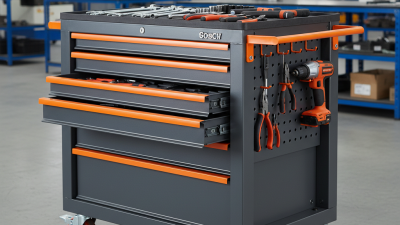
A well-organized workspace starts with dependable storage. This 27-inch professional tool chest offers four drawers to help keep hand tools, accessories, and small components sorted and within easy reach. Its compact footprint suits garages, workshops, and service areas where making efficient use of space matters. The drawer layout helps separate items by type or task, making it easier to find what you need and return tools to their proper place.
Designed for everyday convenience, the chest features durable tubular side push handles for maneuvering and sleek aluminum drawer pulls for comfortable access. A central locking mechanism helps secure all four drawers when the unit is not in use. Manufactured in China by experienced suppliers, this storage solution is suitable for professional workspaces as well as home DIY projects. Its practical combination of organized drawer storage, accessible handles, and centralized locking brings order and ease to a range of tool-storage needs.
A hand-carry case suits compact kits. It becomes awkward when heavy tools must go up stairs.
Choose one for moving tools across smooth floors. Rough ground, thresholds, and narrow doorways can slow its wheels.
They save vehicle space, and you can carry only the sections you need. Not always. Reaching a module at the bottom takes extra time.
Shallow drawers keep sockets and fasteners visible. Deep compartments fit drills and larger hand tools.
Dividers stop small parts from sliding together. Fixed dividers may waste space around oddly shaped tools.
Check empty weight, wheel size, handle height, turning radius, and loaded stability. Measure doorways and ramps, too.
Measure the cart against the van door, liftgate, and storage bay. Confirm the casters lock during travel.
Keep your elbows slightly bent and shoulders relaxed. A balanced load and suitable wheels help across uneven floors.
No. I once chose extra storage and regretted the height when loading it into a vehicle. The drawers helped, but the cart was cumbersome.
Choosing the best portable tool chest starts with understanding the tools you own, how often you use them, and where you normally work. Consider whether you need a compact case for basic hand tools, a rolling chest for a larger collection, or a modular system that can adapt to different jobs. Compare capacity, drawer layouts, compartments, and protective features to ensure every item is easy to find and safely stored. The right design should support both daily tasks and future additions without becoming unnecessarily bulky.
Next, examine construction quality, materials, locks, and resistance to dust or moisture. A reliable portable tool chest should be comfortable to carry, stable when moved, and compatible with your vehicle or workspace. Check handle strength, wheel performance, weight, and overall ergonomics before purchasing. Finally, compare the price with the expected lifespan, warranty coverage, repair support, and long-term usefulness. The best choice is not always the cheapest option, but the one that offers dependable organization, protection, mobility, and lasting value.