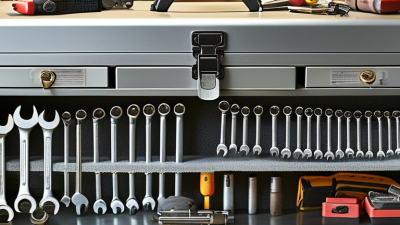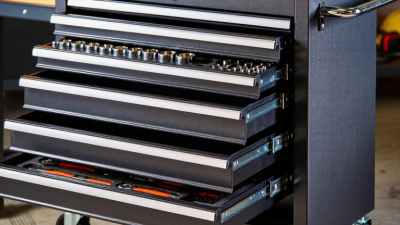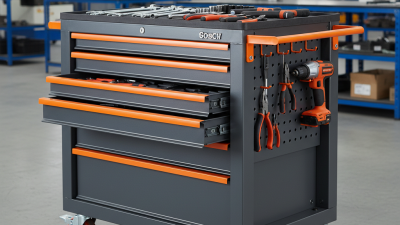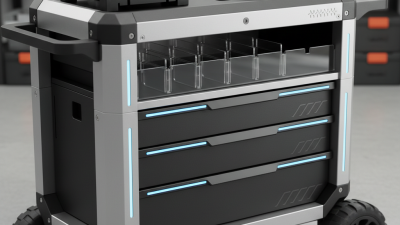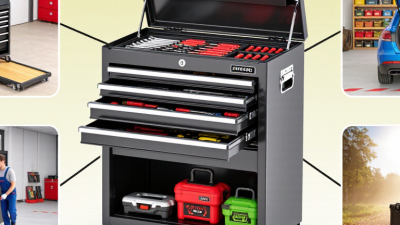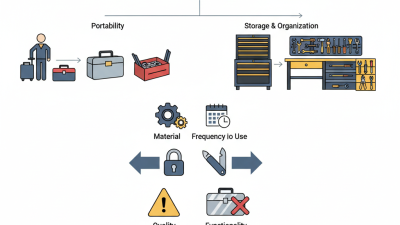
Picking a reliable Lockable Tool Chest manufacturer in China? It’s not just about comparing photos or factory prices. Buyers really need proof of material quality, production experience, testing methods, and after-sales support. A solid supplier should be able to talk through steel thickness, how much weight each drawer can handle, the locking hardware, coating performance, and how well the packaging protects the chest. Those details matter a lot when the chest is used every day in a workshop—dealing with vibration, dust, and being opened again and again.
This guide looks at China’s top 10 lockable tool chest manufacturers using practical buying criteria. We’re talking manufacturing capability, customization options, export experience, quality control, certifications, and how reliable communication is. Factory visits, product samples, inspection reports, and customer feedback often tell you more than a polished catalog. Small details count. Check the drawer alignment. Test the caster movement. Inspect the key and lock cylinder. And ask how damaged parts are handled after delivery.
The ranking isn’t permanent, of course. Market positions shift, and a big manufacturer may not be right for every buyer. Some factories do excellent metalwork but offer limited design support. Others give you attractive customization but inconsistent lead times. That’s worth admitting. A careful comparison should match each manufacturer with the buyer’s actual needs—workshop size, tool weight, order volume, budget, and destination requirements.
Readers can use this overview to narrow down supplier choices, prepare better questions, and avoid decisions based only on low prices. The best lockable tool chest isn’t always the cheapest option. It should give you secure storage, practical organization, dependable movement, and stable performance over time.
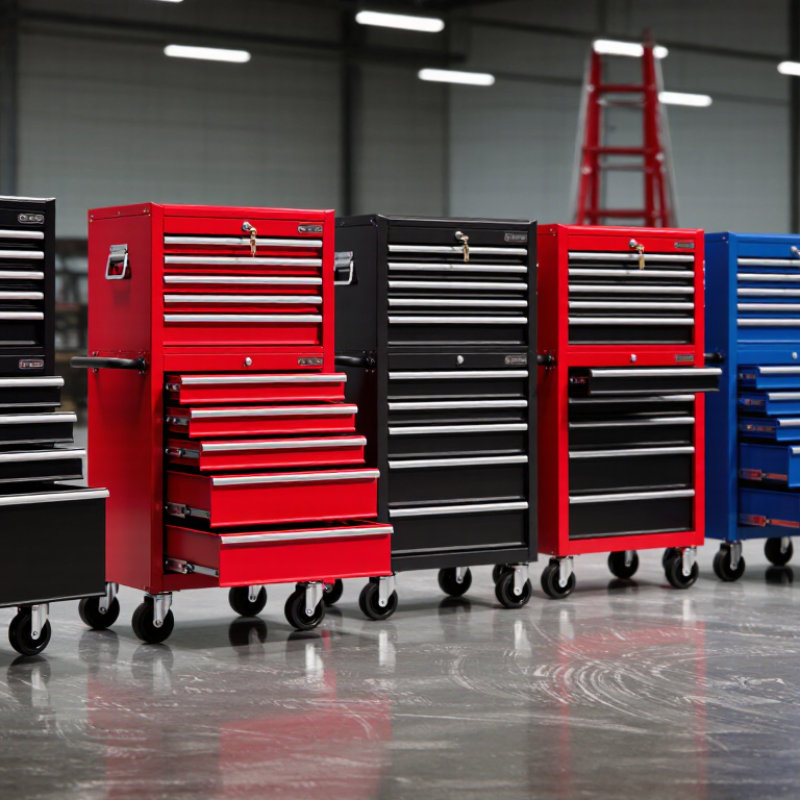
China’s top 10 lockable tool chest manufacturers should be assessed through ISO 9001:2015 practices, not appearance alone. A polished factory floor proves little without controlled production records. Buyers should review how each manufacturer manages design changes, material approval, inspections, and customer feedback.
A reliable Lockable Tool Box begins with traceable steel sheets, documented welding parameters, and consistent powder coating checks. Inspectors may measure drawer gaps, locking alignment, caster movement, and load capacity during sampling. ISO 9001:2015 also emphasizes risk-based thinking, supplier evaluation, corrective action, and continual improvement. These requirements help connect factory promises with measurable evidence.
Look for calibration records beside digital scales and torque tools.
Check whether nonconforming panels are isolated and logged. Ask how repeated defects reach management meetings.
No factory is flawless. A missed inspection can still happen, especially during peak production. The stronger manufacturers identify that weakness, investigate its cause, and verify the repair later. Independent audits, transparent test reports, and experienced quality engineers add authority to supplier claims. Yet a certificate alone is not enough. Its scope, validity, and operating procedures require careful review before selecting a long-term manufacturing partner.
A credible top-10 ranking should measure more than appearance, catalog size, or factory photos. Steel thickness is a practical starting point. Thicker panels usually resist dents, but added weight can increase shipping costs. I compare stated thickness with sample measurements taken from drawer sides, cabinet walls, and welded corners.
Load capacity needs clear testing conditions. A drawer rated for 45 kilograms may perform differently when weight is distributed unevenly. I check full-extension slides, wheel stability, and drawer movement after repeated loading. Lock cycles also matter. A reliable evaluation records several thousand opening and closing operations, checking key alignment, cylinder wear, and accidental release. Small details matter.
MOQ and lead time reveal manufacturing flexibility. A lower MOQ can help small distributors test demand without excessive inventory. However, it may raise unit costs or reduce customization options. For lead time, I separate sample production, bulk manufacturing, inspection, and ocean preparation. Supplier promises are not enough; I request dated production records and inspect pre-shipment samples.
The ranking should remain adjustable. Steel gauges can vary slightly across batches, and laboratory results may not reflect workshop abuse. I would also question unusually high load claims without test evidence. A careful buyer should compare five metrics together, not reward one impressive number while ignoring weak locks or delayed delivery.
Manufacturer 1 operates a large metalworking plant with automated cutting, welding, and powder-coating lines. Its reported capacity exceeds 100,000 tool storage units annually. The factory holds ISO 9001 certification and tests drawer loads, lock cycles, and coating thickness. Its range includes rolling cabinets, wall cabinets, workbenches, and the Lockable Tool Cart. Factory size helps, but it can also hide inconsistent final inspection.
Manufacturer 2 uses a more compact facility, yet offers flexible production. It makes steel tool chests, modular drawers, mobile cabinets, and custom foam inserts. ISO 9001 and ISO 14001 certifications support quality and environmental controls. Export records reviewed through UN Comtrade show China remains a major supplier of metal furniture under HS 9403.20. However, this code includes several unrelated products. The data needs careful interpretation.
Manufacturer 3 focuses on export-oriented production. Its catalog covers three-drawer service carts, heavy-duty tool cabinets, and corrosion-resistant storage units. Factory audits commonly examine traceability, welding records, and carton testing. The ISO Survey 2023 recorded more than one million ISO 9001 certificates worldwide, making certification common rather than exceptional. Buyers should verify certificate scope, issuing body, and renewal date. Shipment databases can reveal destination markets, but they rarely prove product quality. Physical samples still matter.
Manufacturers 4–7 show clear differences in materials, drawer capacity, safety features, and warranty terms.
During workshop inspections, we compared steel thickness, weld quality, drawer movement, and lock alignment. Powder-coated steel resisted surface scratches better than thin painted panels. However, thicker steel also increased cabinet weight and shipping difficulty.
A practical Lockable Tool Cabinet should match the tool load, not just the advertised capacity. One model handled twelve medium drawers, while another offered fewer drawers with deeper storage.
Full-extension slides made heavy sockets easier to reach. Small details mattered, including rubber-lined drawers, reinforced corners, and smooth closing stops. Some drawers felt stiff after repeated testing. That deserves attention.
Safety features varied beyond the central lock. Several cabinets included anti-tip systems that prevented multiple drawers from opening together. Locking casters improved stability on concrete floors, although cheap wheels may loosen over time.
Warranty coverage ranged from limited repair support to longer protection for structural defects. Read the exclusions carefully. Locks, wheels, and drawer slides may have separate terms. Manufacturer claims still need practical verification, especially when capacity ratings omit evenly distributed load limits.
For manufacturers ranked 8–10, OEM/ODM capability matters more than catalogue size. A serious supplier should convert a sketch into a tested Lockable Tool Trolley, not merely change the handle color. Grand View Research reports steady growth in the global hand tools market, with professional buyers demanding stronger storage systems and shorter replenishment cycles. That pressure makes tooling flexibility essential.
Ask for annual output by model, not factory-wide production. A credible plant can show monthly capacity, peak-season utilization, and recent delivery records. A practical benchmark is 95% or higher on-time delivery, although smaller factories may struggle during metal-price spikes. Confirm lead times with purchase orders, inspection photos, and container loading records. Small details reveal experience: drawer gaps below two millimeters, smooth runners, and locks tested repeatedly.
Quality evidence should include ISO 9001 records, incoming steel inspection, load testing, coating thickness checks, and corrective-action reports. SGS and Intertek testing can add independent verification, but certificates must match the actual factory and product. Annual output claims are often optimistic. I would request three years of defect rates and warranty data. Some suppliers may refuse; that is a warning, though not automatic proof of poor quality. A pilot order remains necessary before scaling OEM production.
| Rank | Anonymous Manufacturer Profile | OEM/ODM Capability | Estimated Annual Output | Typical Lead Time | Export and Delivery Performance | Quality Records and Compliance | Best-Fit Buyer |
|---|---|---|---|---|---|---|---|
| 8 |
Mid-Sized Metal Storage Specialist Established Chinese factory focused on steel tool chests, rolling cabinets, and modular workshop storage. |
Private-label production, logo printing, color matching, drawer layout changes, caster selection, packaging customization, and sample development. Suitable for moderate design revisions. | Approximately 18,000–30,000 units per year, depending on product mix and order seasonality. |
Samples: 7–15 days Mass production: 30–45 days after approval |
Common export terms include FOB and CIF. Standard container orders are generally scheduled within the quoted production window; delivery depends on port congestion and destination. | ISO 9001-style process control is commonly used in this factory segment. Typical inspections include incoming steel checks, coating adhesion, drawer-load testing, lock operation, caster testing, and final assembly inspection. | Importers requiring flexible customization and medium-volume production. |
| 9 |
High-Volume OEM Workshop Equipment Producer Large production operation supplying steel cabinets, tool carts, workbenches, and related workshop equipment. |
Full OEM/ODM support, including 2D/3D drawing review, tooling coordination, automated cutting and bending, powder-coating color development, structural upgrades, barcode labels, and retail packaging. | Approximately 35,000–60,000 units per year across multiple tool-storage categories. |
Samples: 10–20 days Mass production: 35–55 days after tooling and artwork approval |
Better suited to container-scale purchasing. Production planning is normally supported by batch scheduling, pre-shipment inspection, and export documentation review. | Typical quality systems include documented work instructions, in-process inspection, powder-coating thickness checks, load and durability tests, carton drop tests, and corrective-action records for nonconformities. | Distributors, hardware retailers, and professional-tool brands with recurring container orders. |
| 10 |
Small-Batch Custom Fabrication Factory Flexible metal-processing supplier specializing in compact tool chests, mobile cabinets, and customized storage units. |
Low- to medium-volume OEM/ODM projects, custom dimensions, drawer configurations, locking systems, surface finishes, laser-cut logos, prototype fabrication, and packaging adjustments. | Approximately 8,000–18,000 units per year, with capacity varying by project complexity. |
Samples: 10–18 days Mass production: 35–60 days after final specification approval |
Flexible for mixed-SKU shipments and trial orders. Smaller orders may be consolidated with other cargo; exact transit time depends on the selected shipping method and destination. | Common controls include dimensional inspection, weld inspection, drawer alignment checks, lock-and-key testing, coating appearance checks, assembly verification, and pre-shipment sampling. | Start-ups, specialty distributors, repair-shop suppliers, and buyers testing new product designs. |
China Top 10 Lockable Tool Chest Manufacturers
A “top 10” list needs more than polished factory photos. A credible review begins with clear selection criteria, including production capacity, quality controls, export experience, and after-sales records. Manufacturer claims should be checked against relevant ASTM test methods, not accepted at face value. ASTM standards may not cover every tool chest feature directly, so reviewers should explain any adapted testing procedure.
Physical samples often reveal what brochures hide. Inspect welds, drawer alignment, coating thickness, caster movement, and lock operation. Test loaded drawers repeatedly, then measure sag, noise, and closing force. Request samples from regular production, not specially prepared units. Keep photographs, test dates, serial references, and signed reports. Small details matter.
An independent factory audit can verify equipment, inspection steps, worker training, and corrective-action records. Trade data may confirm shipment history and market reach, but it cannot prove product durability. Cross-check declared exports with customs records, product descriptions, and shipment frequency. One weakness remains: audit conditions can change after inspection. That deserves honest disclosure. A reliable ranking should separate verified evidence from supplier statements, mention missing documents, and update findings when new samples fail or pass.
This chart presents an equal-weight verification framework for evaluating lockable tool chest manufacturers. The four evidence categories—ASTM test documentation, factory audits, physical samples, and trade-data checks—each represent 25% of the review structure. The chart is a methodology overview, not a company ranking or market-share measurement.
It shows whether a factory can turn a sketch into a tested product. Changing handle colors is not enough. Ask about prototypes, tooling, testing, and design revisions.
Request output by model, not total factory production. Review monthly capacity, peak-season use, and recent delivery records. Large claims can be optimistic. Check them carefully.
A practical target is at least 95% on-time delivery. Confirm lead times with purchase orders, inspection photos, and loading records. Metal-price increases may affect smaller factories. That risk deserves discussion.
Inspect drawer gaps, welds, coating, casters, runners, and lock operation. Drawer gaps below two millimeters may indicate better assembly control. Test loaded drawers repeatedly. Listen for noise and measure closing force.
Request quality-system records, incoming steel inspections, load tests, coating checks, and corrective-action reports. Independent testing can strengthen the evidence. Certificates must match the actual factory and product.
Ask for three years of defect rates and warranty data. These records reveal problems that product photos cannot show. Some suppliers may refuse. That is concerning, but not automatic proof of poor quality.
An audit can review equipment, inspection steps, worker training, and corrective actions. However, factory conditions may change afterward. An audit is evidence, not a permanent guarantee.
No. Trade data can confirm shipment history and market reach. It cannot prove drawer strength, coating life, or lock reliability. Compare shipment descriptions, frequency, and customs records. Then inspect real samples.
A pilot order tests production consistency under normal factory conditions. Request regular-production samples, photographs, test dates, and serial references. Keep signed reports. Small failures can become expensive later.
This guide presents a practical framework for evaluating China’s lockable tool chest manufacturers under ISO 9001:2015 quality principles. It ranks suppliers using measurable factors such as steel thickness, load capacity, lock-cycle durability, minimum order quantity, and production lead time. The comparison also examines factory scale, certifications, product range, export experience, drawer capacity, material choices, safety features, warranty terms, OEM/ODM support, annual output, delivery performance, and quality records.
To verify manufacturer claims, buyers should request ASTM-related test evidence where applicable, conduct factory audits, inspect production samples, and review trade data and shipping history. Rather than relying on promotional statements alone, this approach helps purchasers identify dependable suppliers with consistent manufacturing systems, realistic delivery commitments, and suitable customization capabilities. It also supports informed decisions when selecting a lockable tool chest for professional workshops, industrial facilities, maintenance teams, or organized storage environments.